Blog

  • Presenting at ICA 2017, San Diego, California

    Presenting at ICA 2017, San Diego, California

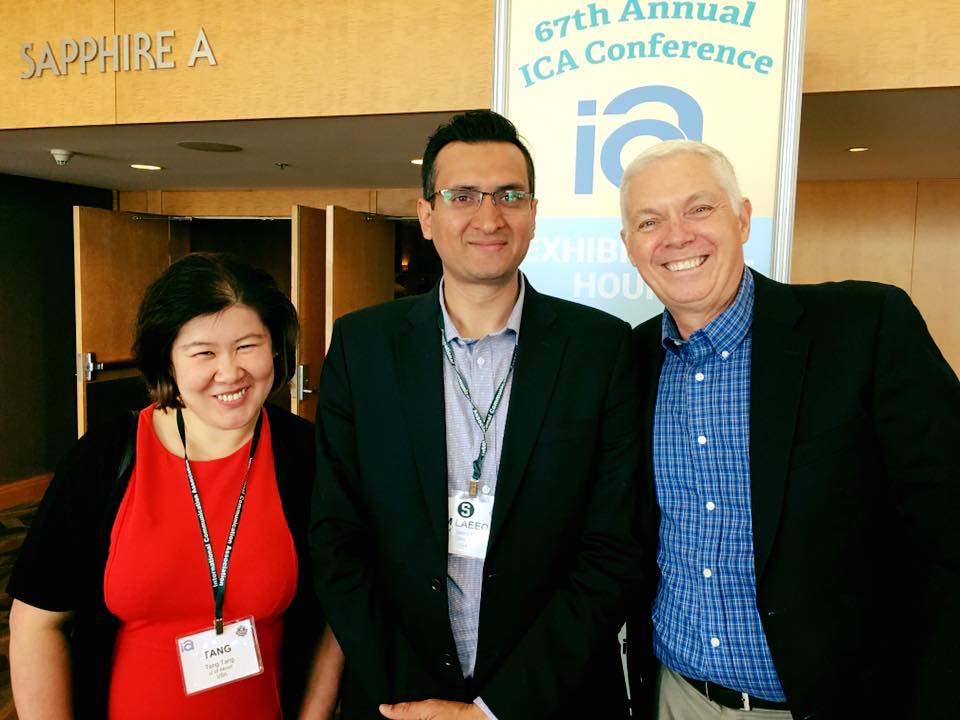
    I am excited to have successfully led two research projects to completion and will be presenting our work at the International Communication Association (ICA) 2017 conference in San Diego, United States.

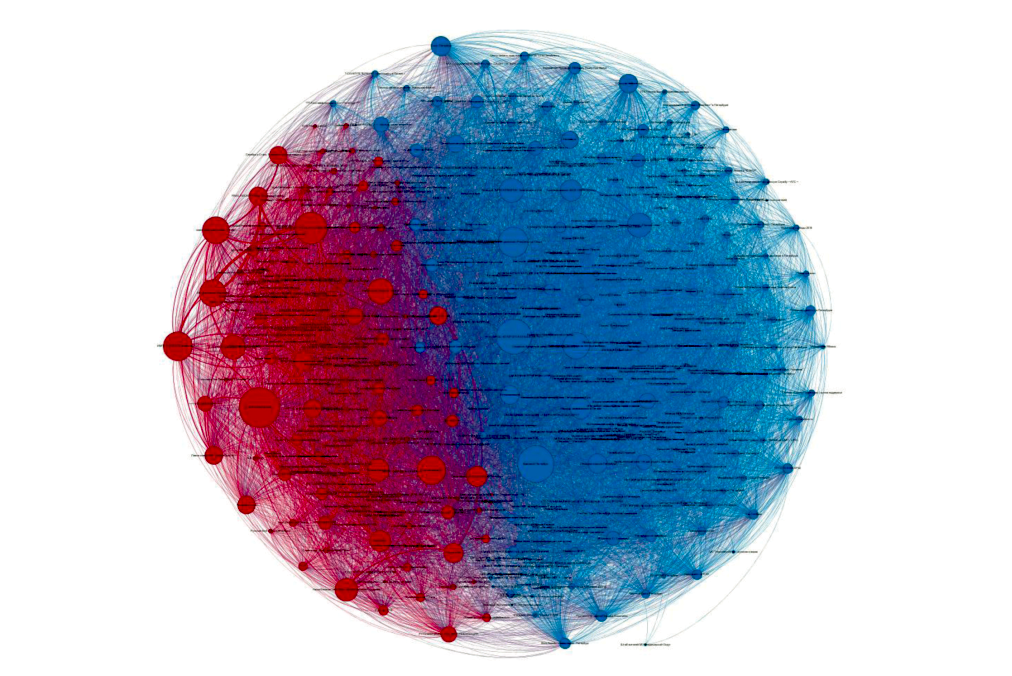
    • Study 1 (Sports Communication Division): How social media defined Rio Olympics: A text analytics approach towards understanding the impact of Zika Virus, [M. Laeeq Khan; Zulfia Zaher; Gregory D. Newton].

    Abstract: Olympics is a global event that brings together athletes who compete in different games. The event also brought together sport fans, athletes, healthcare professionals, and various organizations especially via social media sites such as Twitter. Users posted updates, expressed opinions and concerns, and interacted with each other. The Rio 2016 Olympics in Brazil were marred by negativity especially the widespread scare from Zika virus. This research examines the various concerns surrounding the Rio 2016 Olympics through an analysis of a large Twitter dataset. Results revealed that the overall sentiment surrounding the Rio Olympic event was mostly neutral and positive. Sport enthusiasts, media organizations, and journalists were the most avid tweeters. While health-related concerns were dominant, Zika-related concerns comprised a minor portion. Some users indicated the use of condoms as protective measures against Zika virus.

    • Study 2 (Communication and Technology Division): Sharing online to caring offline: How social media helped build Walls of Kindness across three countries, [M. Laeeq Khan; Zulfia Zaher]

    Abstract: Based on a dataset from Twitter, a sharing phenomenon called the “wall of kindness” was analyzed. Taking inspiration from traditional and social and media, individuals in Iran, Pakistan, and Afghanistan self-organized themselves to create public spaces where anyone could hang old clothes for charity. Results revealed that, information in the form of text, images, and links were being tweeted to inspire others into action, encourage donations, take pride in one’s efforts, and commend others. In terms of occupation, lay persons or common people tweeted most about the phenomena. Journalists or media persons were most supportive of the Wall of Kindness. Wall of Kindness received the greatest support in terms of number of tweets supporting the phenomena in Pakistan. Recommendations for future work are offered.

    For readers outside academia, I wanted to offer a brief insight about ICA. The International Communication Association officially emerged in 1950 as the National Society for the Study of Communication (NSSC). The core objectives of the new organization were identified as, “fostering methodologies, philosophies, courses and curricula in so-called basic communication, speech, journalism, radio and other mass media (including English, etc.) which would implement training more directly for the needs of human relations at all levels” (Weaver, 1977, p. 608). To address the changing field of communication, newer divisions, journals and other publications were added to represent diversity.

    I look forward to meeting my colleagues and forming new academic relationships at the ICA convention in San Diego. I also hope that like last year, ICA would be a phenomenal success.

  • Social Media Engagement on YouTube

    Social Media Engagement on YouTube

    Research: Social media engagement: What motivates user participation and consumption on YouTube?

    Abstract

    This study unearths the motives for YouTube user engagement that has been conceptualized as active participation and passive content consumption. In light of the Uses and Gratifications framework, a sample of 1143 registered YouTube users completed online surveys that helped gauge user behavior. Results showed that for participation on YouTube, the strongest predictor for liking and disliking videos was the relaxing entertainment motive; commenting and uploading being strongly predicted by social interaction motive; sharing being strongly predicted by information giving motive. Passive content consumption in the form of video viewing was most strongly predicted by relaxing entertainment motive, and reading comments predicted by information seeking motive. Greater YouTube experience negatively predicted liking, and anonymity played a role in sharing and uploading videos. Males were most likely to dislike YouTube videos in comparison with females.

    Keywords: YouTube, Consumption, Participation, Uses and Gratifications, Engagement, Social Media

    Highlights

    • This research examines social media engagement on YouTube based on a survey (N = 1143).
    • Users like & dislike for entertainment; comment and upload videos to socialize.
    • Users read comments for information seeking and relaxing entertainment.
    • Users like less as their YouTube experience grows.
    • Males were more likely to dislike YouTube videos in comparison with females.

    http://www.sciencedirect.com/science/article/pii/S0747563216306513

  • Engage outside the echo chambers!

    Engage outside the echo chambers!

    The American people have spoken, democracy has taken its due course, and Donald J. Trump has been elected as the 45th president of the United States. While many are celebrating at this landslide election victory, others are trying to make sense of what has happened.

    A number of polls had forecasted a win for the Democratic nominee Hillary Clinton for the 2016 presidential race. The world of analytics had pointed to the successful Trump social media campaign characterized by high engagement levels. Since the start of the election campaign, Trump had actively tweeted about a range of issues often attracting controversy.

    19th century American showman and circus owner was certainly proven right this election: There’s no such thing as bad publicity. As much as some may feel uncomfortable about speaking about certain topics, many appreciated Trump’s straightforwardness even if it seemed “politically incorrect”. Trump understood the widespread mistrust of established news media, and his rhetoric had resonated with a vast population.

    What most media pundits missed was the importance of engagement and where and how it mattered. Trump had far more followers on social media (15m on Twitter) and Hillary (Twitter 11m). A Google Trends analysis reveals that interest overtime for Trump across the US (and even abroad) was three times higher than that for Hillary. Not only was Trump the most Googled candidate but also the most-mentioned on Twitter and Facebook. Trump capitalized on the unique affordance of Twitter as a concise 140-character medium and connected directly with his followers.

    A social media post, a retweet, a comment, and a like all form important elements of online engagement. While one camp seemed to be high on engagement, the other simply played safe and did not manage to break through the boundaries. Towards the third debate, the democratic camp had higher engagement levels but they may not have translated into more votes. What could have ensured a Clinton victory was engagement not between Democratic voters but across the political divide and with undecided voters. This would have required not only likes and shares but a deeper engagement that requires interaction and meaningful dialogue.

    We live in an age of media and audience fragmentation. If you have ever blocked a Facebook friend or unfollowed a Twitter friend simply because they thought differently, then whether you are a Democrat or a Republican, you are trapped in the echo chamber. A Pew Research Center survey conducted revealed that a majority of Americans indicated having less in common with others especially over political disagreements. Many social media users thought of online discussions as disrespectful, and 83% of social media users said that they ignore political posts they disagreed with, and another 39% had blocked or minimized content due to politics. Add to this the various algorithms that determine what we see from our social media friends based on our clicks. All these statistics point towards a lack of engagement where it matters most.

    The country stands divided more than ever. Issues that concern us all need to be discussed within the norms of decency and civility. It is time to bring back the American ideals that made America one of the strongest nations on earth—respecting the freedoms of fellow Americans and hearing the other side with a big heart. Engagement should not only be between people who think alike, but more importantly with people who think different. That is the only way the positive power of social media can be harnessed for good. It is about time we engaged outside our echo chambers.

  • Snapchat, Facebook, or Instagram, it’s all about effective storytelling

    Snapchat, Facebook, or Instagram, it’s all about effective storytelling

    You might have heard that content is king. Indeed it is, but what does that really mean? Is it about using good filters on Instagram or Snapchat? Or is it about making sure you chose the best pictures and scenes? These are all important considerations, but it all boils down to telling a compelling story through either text, images, or video. Whether you are using Snapchat, Periscope, Facebook, YouTube, or Instagram, the golden principle remains the same, tell good stories.

    Think of social media as a means of transmitting experiences, feelings, values, and emotions. Use it strategically to share stories about your dreams, and take the reader/viewer into your world. Tell a compelling story, convert dull information into something that grabs instant attention. Use storytelling to inspire innovation and new ways of doing things.

    While emphasizing the value of storytelling, I would also like to point towards the importance of clear goals. Once precise goals are established, you can be clear about the exact tactics that you would employ to get your message across. Good stories are based on a clear set of goals. From start to finish, a story can guide a person into action. This might include promoting further engagement or increasing sales.

    Storytelling may be viewed as a critical literacy skill. Think about how one can engage audiences on the micro-blogging site such as Twitter. In 140 characters, one should be able to effectively narrate a story that not only keeps readers reading but also sharing compelling posts. Writer and actor John Hodgman rightly said: “Twitter offered a very restrictive set of protocols that awaken the imagination: what can I do with 140 characters that will be meaningful to others? The solution has proven to be pretty much endless. And do you know what? If the right person is telling the story, I’ll read a tweet stream of sandwiches all day long.”

    Beyond microblogging, effective storytelling can be made possible through sites like Storify. Content can be juxtaposed to create powerful stories. Users have the option to scour through multiple social networks from one place. They can drag, re-order elements they like to form a complete story. A number of media organizations have used Storify to bring stories to life. Here are a few examples: https://storify.com/browse Be inspired!

  • Chronemics

    Chronemics

    It’s amazing how non-verbal communication can sometimes be more powerful than verbal communication. Chronemics, which is the study of meaning and communication of time is an important concept in understanding non-verbal communication.

    A pertinent example is how we choose to respond to an email. We may choose to reply right away, give it a day or two, or never respond at all. No doubt, not responding to an email (even if done inadvertently) may signal the desire to limit or restrict communication. Same applies to unreturned phone calls, texts and messages via social media. Failure to respond or delaying response only adds to the frustration, can prove irritating, and negatively impact relationships.

    Not responding to someone’s email in due time is synonymous to not following proper business etiquette. Some say that three days is the average amount of time one can take in replying to a message. However, when Internet access and smart phones are the norm of the day for many, waiting longer to reply often results in misunderstandings. It may even fall in the realm of respecting someone else’s time through our non-verbal communication. A safe way to deal with a plethora of email especially when one is preoccupied with other work is to send out a one line note indicating that you would get back soon.
    Depending on the situation, a delay or promptness in responding to emails can set the stage for indicating how serious one is communicating. As human beings, we do have the ability to control actions and how we allocate our time. What is worth pondering upon is that time is valuable and in the age of digital media, chronemics is something to be mindful of.

    Here are a few research articles that discuss the important concept of chronemics:

    • Kalman, Y. M., Scissors, L. E., Gill, A. J., & Gergle, D. (2013). Online chronemics convey social information. Computers in Human Behavior29(3), 1260-1269.
    • Tikkanen, S. A., & Frisbie, A. (2015). When Bad Timing Is Actually Good: Reconceptualizing Response Delays. Debates for the Digital Age: The Good, the Bad, and the Ugly of Our Online World, 305.
    • Walther, J. B., & Tidwell, L. C. (1995). Nonverbal cues in computer‐mediated communication, and the effect of chronemics on relational communication.Journal of Organizational Computing and Electronic Commerce5(4), 355-378.
  • SMART Lab Inauguration

    SMART Lab Inauguration

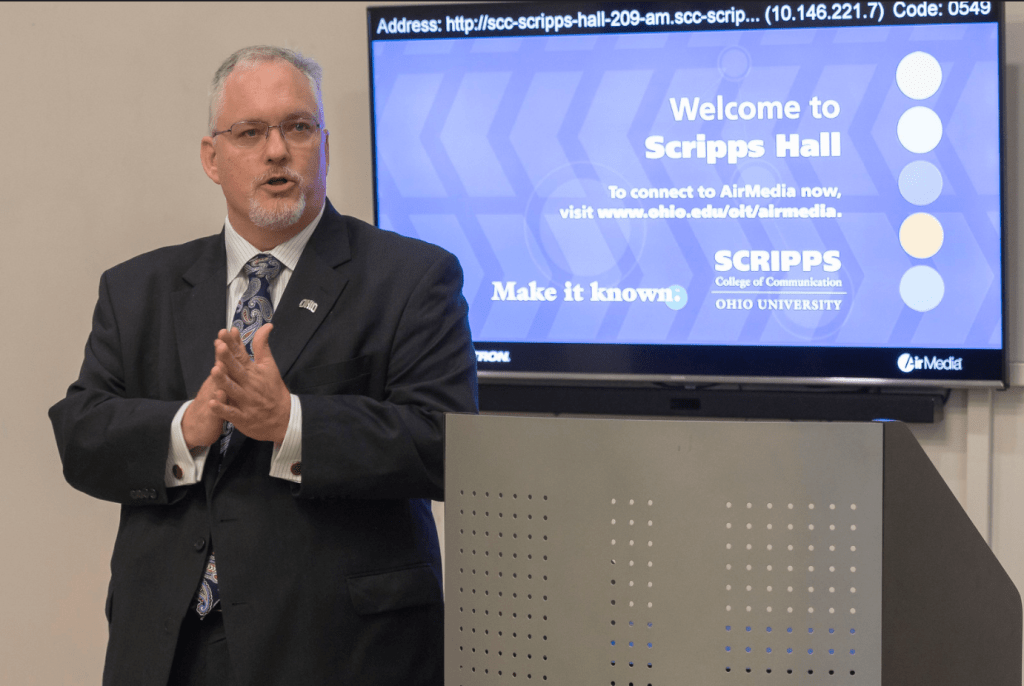
    The 2016-2017 academic year is set to commence at Ohio University. I am excited and humbled to have reached another milestone. The SMART Lab is finally ready to launch and we are set to hold an inauguration ceremony on August 31st, 2016 at 1:00 pm in Scripps Hall.

    As its director, I was tasked with setting up the Social Media Analytics Research Team (SMART Lab) in the Scripps College of Communication. This was no easy feat. Besides gathering a team of scholars and choosing the right technological resources, the lab’s vision and its future direction needed to be charted out. Based on my previous experience of setting up a social media lab at the American University in the UAE, I wholeheartedly embraced this challenge.

    Any such endeavor is only possible through the help of a dedicated team. I highly appreciate the help, encouragement, and timely advice from my colleagues and peers at Scripps College of Communication, especially researchers in my home department. Faculty at the School of Media Arts and Studies played a crucial role besides others across the College in making the SMART Lab a reality. I would also like to recognize the positive contribution of our dedicated students and staff in the entire process. A special thanks to our Dean, Scott Titsworth whose vision, support and encouragement played a pivotal role in the establishment of the SMART Lab. I also want to recognize the enormous technical support and valuable advice from Ricky Chilcott in setting up the technology in the SMART Lab.

    For readers who are new to my website, the Social Media Analytics Research Team (SMART) is based in the Scripps College of Communication and has been established as an interdisciplinary facility to foster and promote cutting-edge research. The mission of SMART Lab is to promote advance research and analyses on the emerging big data challenges, through academic collaboration, industry-academia linkages, and innovation.

    The Lab is equipped with the latest technology to gather, analyze, and visualize social media data. Our facility provides excellent space for media and communication scholars to engage in impactful research. At this juncture, we are reminded of the reality that a thorough understanding of social media analytics is vital for individuals, organizations and businesses in a globally competitive world. We are honored to have the support of various stakeholders in the industry and other institutions with an interest in social media analytics.

    I see the establishment of the SMART Lab as another step in implementing Ohio University’s vision to “be the nation’s best transformative learning community where students realize their promise, faculty advance knowledge, staff achieve excellence, and alumni become global leaders”. Let us celebrate the bringing together of passionate researchers from across Scripps College of Communication and beyond!

  • Starting Voice of AURAK: A Journey in Student Storytelling

    Starting Voice of AURAK: A Journey in Student Storytelling

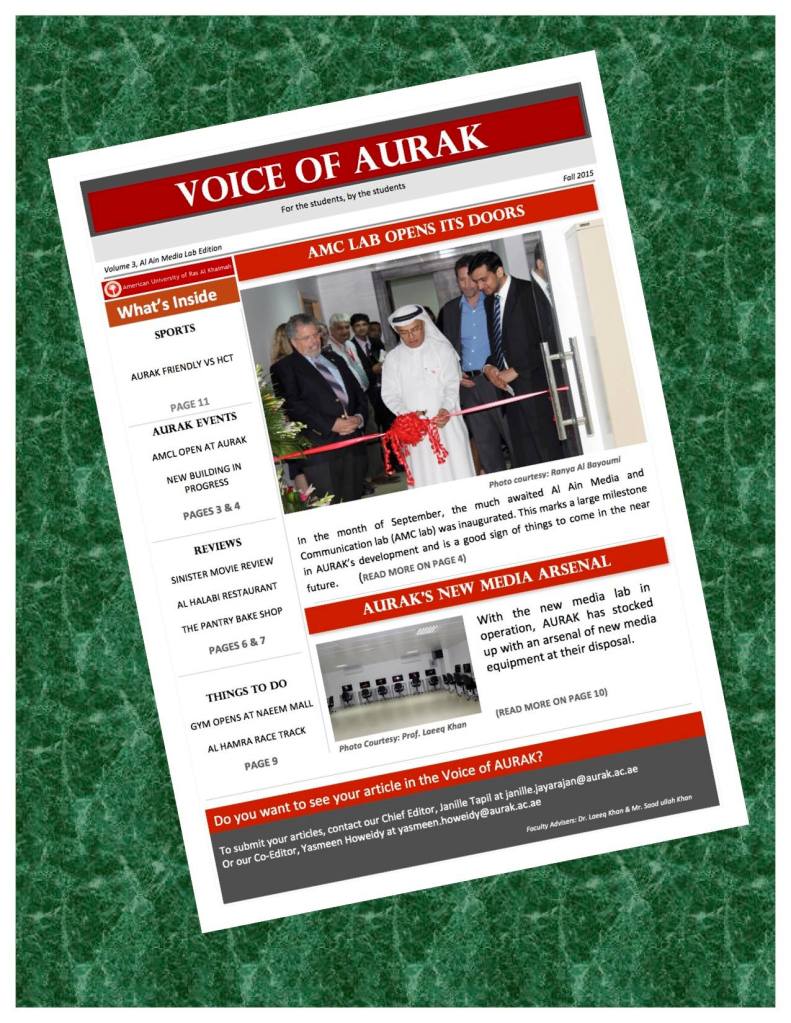
    In 2014, at the American University of Ras Al Khaimah, I felt an urge to create something that would outlast a semester and give students a reason to be proud of their words. Our Communication program was still young, full of students eager to learn but unsure how to find their voices. That’s when I proposed the idea of starting a student newspaper—Voice of AURAK.

    I remember the first conversations with my undergraduates. Some were nervous—“But I’ve never written anything like this before.” Others were excited, already brimming with story ideas about campus life, culture, and student issues. My role was part coach, part editor, and part cheerleader. I guided them through the basics of reporting and writing, and, more importantly, showed them that their perspectives mattered.

    Designing the layout was my late-night project. I wanted it to look professional yet approachable, something students would be proud to share. But print wasn’t enough; I knew their stories needed to travel further. So, we took Voice of AURAK online, creating not just a newspaper but a platform. With social media accounts and short video features, we reached audiences across channels, giving students their first taste of cross-platform journalism.

    I’ll never forget the pride on their faces when the first edition went live. Students shared links, posted on social media, and even pulled friends aside to say, “Look, I wrote this.” That moment—when they realized their words had reach and impact—was the most rewarding part for me.

    Lessons Learned

    Launching Voice of AURAK taught me lessons that I carry into every teaching and mentoring role today. First, that students often underestimate their own abilities until given the right platform. Second, that design and technology matter—not just for aesthetics, but for accessibility and reach. And finally, that mentorship is most powerful when it combines structure with freedom: giving students the tools they need but allowing them to discover their own voice along the way.

    What began as a small initiative in a young Communication program became a defining experience for me as an educator. Voice of AURAK reminded me that the role of a teacher is not only to impart knowledge but to create spaces where students can surprise themselves with what they are capable of achieving.

  • The social media roller coaster

    The social media roller coaster

    Whats with all the change on social networking sites that has been haunting us for months. Facebook, Twitter, Google + all seem to be on a fast track of rapid changes that often makes users uneasy. Vying for superiority in the age of tough competition sometimes makes companies lose sight. A problem at one place is an opportunity waiting to be capitalized by another company. First of all let’s analyze whether there is any problem or not?

    Many of us who are active on Facebook may have noticed the rampant changes taking place. The ticker on the top right corner, who is reading what on what site, and the new profile all combine to make us feel as if we hardy exist and have no say in what happens to our account and how it is used. We are aware that young are on social media and are actively using it to socialize and communicate. So there is no going back. Regardless of the changes, rest assured, I am not abandoning Facebook. The benefits of it outweigh the costs.

    While the new features introduced by sites like Facebook may prove annoying at the beginning, they have been generally welcomed by most (at least the ones I know). Whatever Facebook changes come our way, social media addicts simply accept them. Has anyone seen droves of addicts abandoning Facebook? Nope! There is no question of liking or unliking these changes. What choice do we have anyway? We are not asked before any changes are implemented. Ideally, giving users a little more power in what they are given would save sites like Facebook from any potential negative publicity. But the reality is not so favorable for the addicts.

    Change must be managed

    In the business world, we know that customers are unforgiving. Any product changes are not done casually without taking consumers into confidence. By this I mean that a through market research precedes any possible new product development or a change to an existing product. In the case of SNS such as Facebook, it is observed that changes are implemented in a way that may not be very pleasing to the users. I am sure, if there were a choice in shifting to another similar network, many would shift. However, thanks to the absence of a viable alternative and the presence of network effects, it is not easy to transfer to another social networking site (SNS) overnight. In addition, there are valid concerns about privacy on Facebook that we sometimes hear from our friend status updates or news articles. When abrupt changes are implemented it becomes a challenge for many to understand what is going on, let alone how privacy is being maintained. It is also evident that giants like Facebook actually dictate how we conduct online social interactions. Site design, share settings, and a number of design factors determine what we get to know from others and what others know from us.

    So what could have been done differently? I view this from an effective change management perspective. First, it should be clear that it is Facebook’s right to implement changes that would prove to be beneficial for everyone or just benefit Facebook in some way. In addition by creating an account of Facebook, we knowingly agree to the terms of site use. However, to manage a healthy image and respect users, any new changes can be implemented in a gradual and educative way rather than forcing change on others in a very short period of time. For example, before any new changes are implemented, video tutorials and messages can demonstrate the proposed changes to Facebook. This would not only build positive goodwill but also facilitate the change process. This is also productive in the long-run as users would have a high level of trust for the site. In the face of new powerful competition users would not flock to the new platform owing to the long build up of mistrust at a subconscious level.

    How new changes are beneficial

    Amongst this list of tirades, there are some very useful features that attract us to this site. Facebook recently introduced “lists” which allows users to categorize “friends”. Who ends up on a “close friends” list or a “restricted” list, his/her fate. But what is thought provoking is that due to this feature, we as users are compelled to think about our Facebook “friends” in a way we may not have thought about before. Which lists do our classmates fit in? Are they all close friends, probably not. We end up creating lists where we can organize our contacts and thus think about them differently just because we are supposed to fit them in some category. This is in some ways good as we consciously think about our contacts and where they fit in, in comparison with a long list of “friends” who are all treated as… Facebook “friends”.

    Then comes in the question of selective status updates. We may not like to share everything with everyone. Imagine a student sharing a status update about him/her enjoying a bowling night while the person’s professors waits for the person to turn in an assignment. There seems to be nothing wrong with this, but lists sure do make us think about possible issues that may make us feel uncomfortable. A clear categorization of contacts in lists allows us to selective share updates in an organized way.

    So what may have proven to be an inconvenience for some at the beginning is now a actually beneficial for many. Facebook is way more organized and has made us think of our “friends” being really friends besides those that really matter in our overall social network. New changes have also made us think about those who seldom comment or “like” our status updates, whom we only met once or possibly never met, and deal with them accordingly.

    As far as I can remember, a lot changed in 2011. Google + is the new player in town and although not as successful as Facebook and Twitter, has its own strengths and weaknesses. For the next year, all I say to the established players and the not so established players, please take it easy and manage change in a manageable way and have a plan of action that awards respect to the millions of users who use these sites day and night. This roller coaster is way too exciting. We can’t live without you, I am sure you cannot live without us!

  • Importance of Comments

    Importance of Comments

    Do you ever pay attention to comments at the bottom of news articles, YouTube videos or on status updates on social media sites? If yes, how important do you think they are? Do they make you think differently? These are some questions that can be interesting and worth looking into.

    Comments on news articles, videos, and photos can be informational, amusing or even distasteful. Reading comments can be an experience that has more to it than the eye can see or the mind can contemplate. It can be an experience that engages the readers and often provide them with ample material to agree or disagree with. No matter which direction the comments generally take–positive or negative, users may get impacted by them consciously and unconsciously. Comments are not mere views on subject, they may have considerable value in terms of manipulating the narrative and general opinions of the users.

    Comments and have become very popular onlineWebsites such as New York Times, The Economist, CNN, Aljazeera, YouTube, Flickr, Yahoo News etc. attract a lot of comments and debates. We can easily find comments on content of different types. There is also a rising trend towards the  integration of social media with news articles, videos and images. It is possible to comment through Facebook and Twitter log-ins on a website which has news and other content.

    Another interesting phenomena is rating content or even users. Rating serves as a form on online voting system expressing user like/dislike or popularity of a certain content. In a single click, users can express their opinion and thus add to the activity on a site.

    From a user perspective, comments on a website create the impression of an active audience. A large number of comments demonstrate that the website is active, popular and full of energy. This may play a role in further encouraging more comments and even sharing of the content on other platforms. Furthermore, comments may encourage users to view the website as a place where everyone is and thus somewhat add to its credibility as a site which is visited by a number of people.

    I got interested in news comments mainly because of the extreme skewness experienced on prominent news websites. Such extremely negative or flaming oriented comments can be a common sight especially on articles whose topics involve politics, religion or something contentious. Some express the opinions in decent and civil ways, while others resort to the use of abusive language to get their message across. This may be perfectly normal for some people and even acceptable, but research shows that flaming is generally disliked as it undermines the very nature of a healthy debate that can yield positive results for the society. While some sites may moderate comments and disallow foul language, others may be less restrictive or lack the resources to deal with a large number of commenting activity.

    Comments can also be very beneficial. They provide unique content that reflects the candid and true public opinion as compared to published and carefully managed content on news sites. Commenting activity thus serves as free flow of views and what the readers actually think about issues and the information in an article. It would be interesting to know how much (if at all) opinions are altered after reading or viewing certain content in the presence and absence of comments.

    In a recently conducted research, I found some interesting results from the commenting behavior on YouTube videos. The data gathered is set to be further analyzed and detailed results will be published. In short, it was found that anonymity played a role in the type of comments posted. Interestingly, 97% of flaming comments were from users who were anonymous.  This was also known through earlier research in this domain. Similarly, the type of video also impacted the type of comment it attracted.

    Research into commenting is fascinating and excites me as a researcher. When I view the commenting phenomena in the light of crowd psychology, I can see how comments that may seem meaningless and unimportant, may hold the key to understanding the formation of public opinions. The impact that comments have on users can carry more weight than the news itself. If that is where the user focus is, then more needs to be done to understand the interesting phenomena of commenting.

  • A good recommendation letter?

    A good recommendation letter?

    “I am thrilled to write a recommendation for Mr. Ryan who is a wonderful, hardworking, conscientious person”. Do you see anything wrong with this statement? If yes, then you are also one of those who are thinking of an important issue that I will be discussing in this post.

    We may have all requested a recommendation/reference letter from a professor, an acquaintance, or a colleague. In applying for a much sought after position at an organization, recommendation letters can play a decisive role. At other times, we may have been requested by someone to write a recommendation letter for them. For this purpose, it is important to know the art of writing such a letter that is convincing enough to land someone the right job in an organization or admission in a good school.

    Some may also say no to a recommendation letter writing request. That’s perfectly fine, since there is no obligation to do so. It is better to say no if you feel its hard for you to find much positive to say about the person, not because you think that the person does not have anything positive, but because you may not know that person well enough.

    More than just writing the recommendation letter, it is quite important to write that letter well. So what makes a letter, a good letter of recommendation? I would say, keep it balanced, and simple. Do not be overly generous in writing paragraphs after paragraphs of embellished sentences that cross the boundaries of reality into fiction. After all, we are humans, and while there may be super humans amongst us, a superman is only found in movies.

    It is desirable to choose positive words that actually define a person for whom you are writing the letter. But be mindful that mentioning the same good narratives that fit all, without even pausing for a minute and thinking whether the person actually possesses the qualities mentioned, can in fact prove to be counter productive. Often, by overstating things, the message describing an exceptional person, may lose its value. I am saying this out of experience of sitting in admission committees (before starting my PhD) where assessing potential candidates for the program based on recommendation letters sometimes made me wonder, do such people even exist? I can say with all honesty that when face-to-face interviews were conducted, faculty members would try to match what was in the letters with what they could assess from meeting the person during interviews.

    While I argue against writing recommendation letters that are overly embellished with praise, I also want to clarify that well-written letters are important.  What I am saying is that such positivity should be based on reality, and that a balance must be maintained whenever engaging in such an activity. Yes there are individuals out there both in academia and outside, who would write recommendation letters that would seem very nice to you (hey, who dislikes praise? :)), but realistically speaking, how much value would such a letter have when compared with how the person for whom the letter is written really is.

    By writing a cogent letter of recommendation that is balanced you will be doing a needed favor to the person who needs it. Moreover, it is your own reputation at stake when writing such a letter. So the best policy is to keep it simple, but more importantly, keep it real. The emphasis is not to be on how many fancy words are used to describe the qualities of a person, but on how well the argument is laid out that is supposed to be convincing and elegant. There is nothing more convincing than natural expression that is pure and simple.