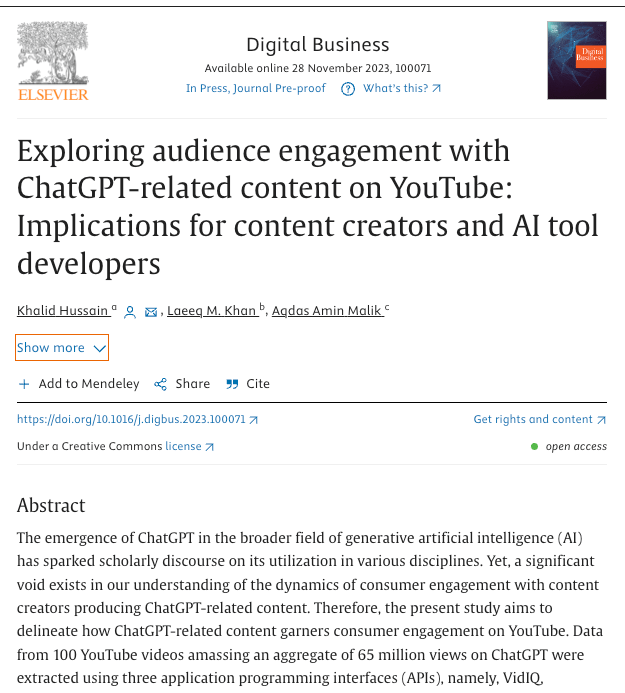
In the dynamic world of digital content, a new trend has emerged with significant implications: ChatGPT-related content on YouTube. Our latest journal article is a collaborative research effort between Professors Khalid Hussain, Laeeq Khan, and Aqdas Malik. The study delves into this evolving trend, offering valuable insights for content creators and AI tool developers. After a rigorous blind peer review, the paper was finally published in the prestigious Journal of Digital Business.
With the rise of generative artificial intelligence (AI), particularly ChatGPT, an intriguing academic conversation has unfolded regarding its use across various fields. However, one area that remained unexplored until now was how audiences engage with ChatGPT-related content on YouTube. Our study, therefore, sought to fill this gap by examining the engagement levels such content receives on this popular platform.
The research involved a meticulous analysis of data extracted from 100 YouTube videos focused on ChatGPT, collectively amassing 65 million views. We utilized three application programming interfaces (APIs) for this purpose: VidIQ, Tubebuddy, and SocialBlade. To provide a comparative perspective, we also looked at 200 videos from the same content creators but not related to ChatGPT. Our analysis tools included one-way ANOVA, multigroup Structural Equation Modeling (SEM), and comparative line graphs.
We grounded our study in the Uses and Gratifications (U&G) theoretical framework. This approach helped us understand the motivations behind audience engagement with these videos.
Key Findings Our findings are revealing in several aspects:
Increased Engagement with ChatGPT Content: Videos related to ChatGPT garnered significantly higher engagement compared to other content types from the same creators.
Subscriber Count Less Influential: Interestingly, the ChatGPT-focused content showed less sensitivity to the channel’s subscriber count. Channels with fewer subscribers often saw higher viewership on these videos.
Boost in New Subscribers: Channels experienced a notable increase in new subscribers when they posted ChatGPT-related content, compared to their other videos.
Implications The implications of these findings are manifold and extend across various sectors:
For Content Creators: Understanding the audience’s attraction to ChatGPT-related content can guide the development of more engaging material.
For AI Tool Developers: Insights into how audiences interact with content about their products can inform future development and marketing strategies.
For Advertisers and Content Publishers: This study provides valuable data for targeting and content strategy decisions.
This pioneering study not only sheds light on the unique dynamics of audience engagement with ChatGPT-related content on YouTube but also opens the door to further research in this area. It offers critical insights for a wide range of stakeholders, from content creators to AI developers, and highlights the ever-changing landscape of digital content consumption.
The emergence of ChatGPT in the broader field of generative artificial intelligence (AI) has sparked scholarly discourse on its utilization in various disciplines. Yet, a significant void exists in our understanding of the dynamics of consumer engagement with content creators producing ChatGPT-related content. Therefore, the present study aims to delineate how ChatGPT-related content garners consumer engagement on YouTube. Data from 100 YouTube videos amassing an aggregate of 65 million views on ChatGPT were extracted using three application programming interfaces (APIs), namely, VidIQ, Tubebuddy, and SocialBlade. We subsequently contrasted this dataset with data from 200 other videos produced by the same creators. The data were analyzed using one-way ANOVA, multigroup SEM, and comparative line graphs. Employing the Uses and Gratifications (U&G) theoretical framework, our results indicate that innovative content such as ChatGPT-related videos garners more engagement than other content types from the same YouTube channels. Intriguingly, this study finds that ChatGPT-focused content exhibited diminished sensitivity to channel subscriber counts, with channels having fewer subscribers achieving higher viewership numbers. Furthermore, ChatGPT-related content induced a surge in new subscribers to the channel compared to the other content types. The present study pioneers the investigation of audience engagement with ChatGPT-related content by juxtaposing it with other content from the same YouTube channels. We also explicate the relationship between content sensitivity and extant subscriber counts. The present study provides vital insights and implications for a diverse audience, including content creators, developers of AI tools, advertisers, and content publishers.
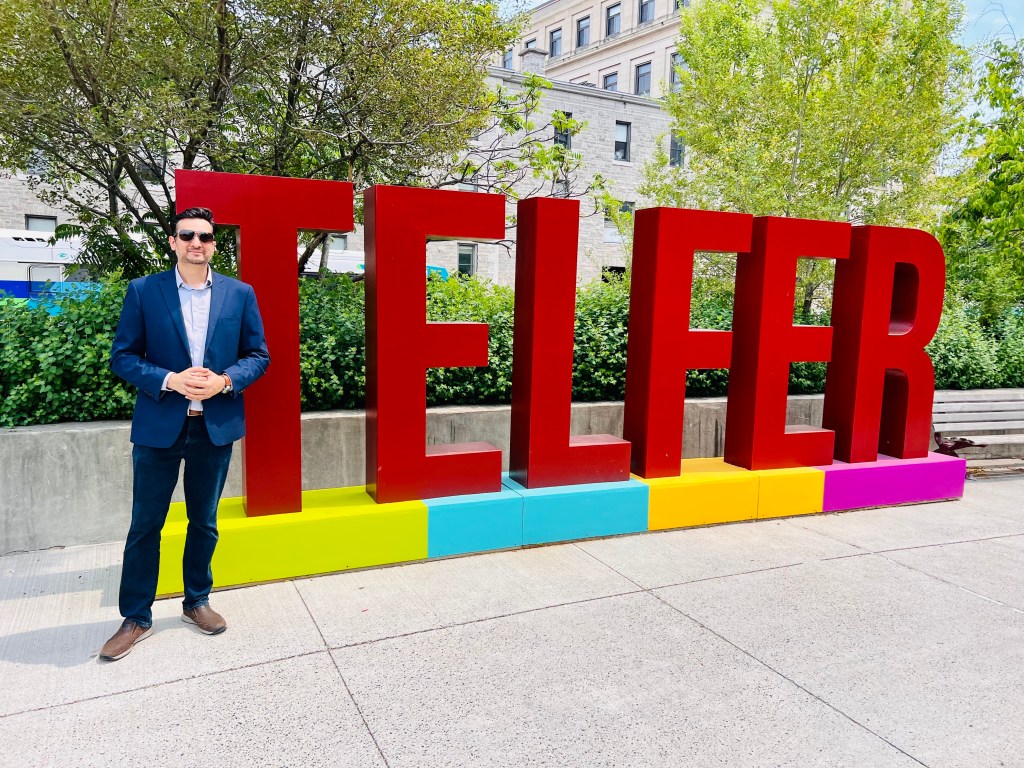
As a passionate advocate for interdisciplinary collaboration, I am thrilled to announce an exciting new venture that has come to fruition thanks to this belief. I am embarking on a summer research project in Ottawa, Canada, in partnership with Prof. Umar Ruhi, funded by the prestigious Telfer School of Management at the University of Ottawa. This unique opportunity will bring together leading international research minds in a joint mission to advance our understanding of the digital world and its many complexities.
In today’s hyper-connected world, information travels at lightning speeds and can be shared instantly. However, with such convenience and speed comes a flood of misinformation and disinformation that can cloud the truth and influence decisions on a global scale. Our hope is that by working together on this research grant, we can better grasp the complexities of the problem and find ways to mitigate the harm that can result from spreading false information.
The initiative aims to accomplish two main things. Our primary goal is to gain ground-breaking understanding of the nuances of false information and deception. Research on these occurrences is crucial if we are to anticipate their development, comprehend their causes, and contribute to the development of policy and practice that can lessen their negative effects.
Second, we hope to contribute to the scholarly world. This research grant will allow me to host seminars and workshops on visual analytics, data, and social media participation. Graduate students (doctoral and MSc) in management, health systems, digital transformation, and innovation at the University of Ottawa are the intended audience for these events. I believe that by holding these seminars and workshops, we will encourage a mindset of sharing and learning.
The objective of our project is to equip the future generation of researchers with the knowledge and abilities they’ll need to succeed in today’s information-driven world. It is vital to train the next generation of leaders to recognize bias in digital media, apply critical thinking to it, and use data and analytics to draw actionable conclusions.
I am grateful to have the opportunity to collaborate with Prof. Umar Ruhi and the other dedicated academics at Telfer School of Management. Together, I believe we can achieve remarkable results, which will benefit the entire scientific community.
I am excited for the new experiences and knowledge we will gain on our voyage. Here’s to a summer of learning, discovery, and meaningful collaboration in beautiful Ottawa, Canada 🇨🇦.
Here is some information about the workshops that I will be conducting at Ottawa:
Workshop 1: Bringing Data to Life: An Interactive Journey into Visual Analytics
In this workshop, participants will explore the intriguing world of visual analytics and data storytelling. The modern digital landscape is awash with data, and effective visual representations can turn this raw data into engaging stories. This workshop is designed to provide a hands-on experience in creating data stories using a cloud-based tool called DataWrapper. Participants will learn how to transform complex datasets into digestible and compelling visual narratives. Students will gain practical data manipulation and visualization skills, preparing them to communicate their findings clearly and effectively in their academic and future professional life.
Target audience: Students (and faculty)
Duration: 2 hours
Learning outcomes:
Participants will be able to identify the key elements of effective data storytelling
Participants will be able to use a cloud-based tool to create effective visualizations
Participants will be able to apply the principles of visual analytics and data storytelling to their own professional projects and/or research
Workshop 2: Social Media Engagement and its Impact on Public Discourse and Health Awareness: An Overview of Current Research
This workshop will delve into how social media shapes user participation, motivation, and engagement on platforms like YouTube, Twitter, and Instagram. We will examine the role of social media in propagating and combating misinformation, influencing users’ information consumption habits and decision-making processes. This includes understanding the balance between user engagement and the risk of misinformation, particularly in the context of public health. The workshop aims to underline the importance of comprehending and navigating social media’s multifaceted impacts in today’s increasingly digitized and interconnected world.
Target audience: Faculty, graduate students, and professionals
Duration: 1 hour
Learning outcomes:
Participants will gain an understanding of the dynamics of online user engagement
Participants will understand the role of users and social media in both spreading and combating misinformation
Participants will learn how to leverage their understanding of social media engagement and information consumption to facilitate effective health communication
Social media use has become an integral part of the lives of billions across the globe. As a modern media powerhouse, YouTube is the world’s most popular video-sharing site (Alexa, 2021). The largest market for YouTube is the United States (14.8%), followed by India (8.1%). Over 70% of the views on YouTube are from mobile devices (Cooper, 2019). YouTube content is diverse, emanating from a broad range of audiences, in a number of languages, and in a variety of genres (Khan, 2017). Videos are one of the most engaging media, and such a high level of activity on this social media platform necessitates a thorough analysis of the content posted in the form of videos and comments. We define social media analytics research as the use of varied tools and techniques to make sense of online activities and conversations by obtaining, refining, analyzing, and visualizing social media data. Such analyses can include both quantitative and qualitative research techniques with the aim of understanding online user behavior, needs, perceptions, and challenges.
In this chapter, we shed light on the various tools for YouTube data collection. These include the more recent social media analytics techniques that often employ ‘big data’. In addition, we discuss seminal research centered on YouTube, highlight limitations, and sum up the various practices to effectively conduct YouTube research. Furthermore, we offer two case studies to illuminate the latest research on the platform and the methods employed to answer the research questions. In discussing the significance of big data, artificial intelligence (AI), and machine learning, we conclude by advocating the need for collaboration across varied academic disciplines.
Researchers from various scientific disciplines such as communication, business, sociology, and informatics have applied numerous research methods to examine and gain insights into different perspectives surrounding the platform itself and its users. These include the need to explore users and communities to understand their motivations for posting and watching, and in and predicting video virality. A study by Snelson et al. (2012) identified seven key areas that needed attention in YouTube research: (1) users, groups, and communities; (2) teaching/learning; (3) social and political impact; (4) video creation/production; (5) legal/ethical concerns; (6) media management; and (7) commercial interests (Snelson et al., 2012). We have adapted and refined these categories to offer the following five major areas that need to be explored in YouTube research:
1. User motivations for engagement 2. Social, political, educational, and economic impacts of video content 3. Impacts of user engagement (views, likes, dislikes, comments, and shares) on user perceptions and sense-making 4. Formation of groups and communities 5. Ethical and legal challenges of video sharing.
Question 1: What type of YouTube videos are users posting?
Question 2: What kind of comments are YouTube users posting underneath videos?
Question 3: Why are people viewing certain YouTube videos?
Question 4: How do people derive meaning from reading comments?
Question 5: Which videos attract the highest views (passive engagement)?
Question 6: Which videos attract the highest active engagement from users in the form of likes, dislikes, comments, and shares?
Question 7: What are the roles of YouTube algorithms and the recommender systems in suggesting videos to users?
There is a range of options available for researchers in seeking answers to various questions within the five major research areas outlined above. Before discussing the various data collection and analysis techniques in YouTube research, we first want to shed light on some of the key questions that have been frequently posed by researchers in the realm of YouTube research (Das et al., 2019; Jiménez and Vozmediano, 2020; Lee and Yoon, 2020; Moon and Lee, 2020; Porreca et al., 2020; Zhang et al., 2017).
I have designed a new course in visual analytics that I am teaching this spring 2022 at Ohio University. The visual analytics hands-on course trains students to work on interactive visual interfaces that support analytical reasoning and reveal vital actionable insights. This course introduces students to concepts, tools, and best practices in visual analytics as they examine and uncover hidden opportunities deep within big data. Interactive visual representations are integrated within underlying analytical processes, including descriptive and predictive analytics, to facilitate high-level data-driven decision-making. Based on readings, cases studies, tutorials, and analytics assignments, course emphasis is on providing a thorough understanding of visual analytics tools. Students learn to go beyond charts and graphs to create multi-dimensional exploratory views of data. The aim is to equip students to think like data analysts equipped with the knowledge and understanding of visual analytics principles, creating effective dashboards and visual analytics solutions using Tableau.
Learning outcomes
Students fully engaging with this class and completing all the assignments successfully will, as a minimum be able to:
Access and connect data to support high-quality analyses.
Visually transform data to support assessment, planning, and decision-making.
Create, analyze, and evaluate representations of dynamic data in dashboards.
Demonstrate the recognition of patterns within data through perceptual inference of relationships.
Identify patterns of predictive analytics in the appropriate contexts.
You can access the syllabus of the Visual Analytics course in pdf format here: syllabus
I am pleased to share our latest research published in the Technology in Society journal, analyzing attitudes towards COVID-19 vaccine passports. Due to the uncertainty created by the Covid-19 pandemic, numerous countries have attempted to put in place systems to shield their economies and citizens from the pandemic’s worst effects. Agencies, governments, and schools are all working to discover ways to persuade individuals to be vaccinated. In some places, people who have not been vaccinated are being subjected to restrictions.
Various health agencies have suggested that COVID-19 vaccination is the most effective way to deal with the pandemic and prevent the virus from spreading. As a result, a vaccination card known as the Covid-19 passport has been introduced in various countries serving as proof of immunization. A vaccine passport or certificate has proven helpful in multiple situations, particularly while traveling to foreign nations. International health authorities and some governments (such as the European Union, the United Kingdom, and China) have already adopted COVID-passports, which now act as certifications to formalize and verify vaccination status. Several arguments have been expressed on numerous forums against some of these measures, which seem restrictive and infringe on personal freedoms and rights. However, including introducing some form of certification or the COVID passport is seen by others as part of the ongoing attempt to restore economies and lives to normalcy.
The study employed the Health Belief Model (HBM) and the Theory of Planned Behavior (TPB) to offer an exploratory analysis of Twitter data about COVID-19 passports. We analyzed Tweets about the COVID-19 passport. A total of 19,730 tweets were retrieved using Twitter API, and keywords COVID* or corona* AND passport OR certificate. We further coded the analytical sample according to nine dimensions: (i) account type (male, female, or organization); (ii) tweeter occupation; (iii) tweet content (personal opinion, news & information, and link to a petition or a poll; (iv) tweet modality (text, URL/link, image, and/or video; (v) attitude (positive, negative, neutral; (vi) self-efficacy (whether the tweet implied knowledge, confidence, or information of how to get the COVID passport; (vii) perceived barriers; (viii) perceived benefits; and (ix) cues to action.
We found that most Twitter users thought that the COVID-19 passport was a good idea. The analysis also revealed that personal Twitter accounts accounted for 49 percent of COVID-19 passport tweets, followed by media organizations with 23.87 percent, media and art celebrities with 14.19 percent, politicians with 4.5 percent, and the tourism industry with 2.58 percent. According to gender, 52 percent of the tweets came from men, 16.1 percent from women, and the rest came from unidentified accounts or groups. Supporters of the vaccine passport also saw it as nothing new, claiming a range of social and economic benefits to justify their position. The findings reveal the path forward in establishing a viable COVID-19 passport system. The COVID-19 passports are clearly aimed towards resuming international trade, travel, and other social activities in the wake of the current epidemic without risking public health and safety. Our study offers the following policy recommendations:
Define specific use-cases: The uses of vaccine passports need to be clearly defined and rationalized to alleviate public concerns about employers’ discrimination and ensure equitable access to business and government services.
Ensure interoperability: Adopted solutions must be interoperable and should leverage standards that enable the seamless exchange of information across disparate technology platforms and different geographic boundaries.
Safeguard personal and health data: Data protection and privacy requirements should be seriously considered and openly communicated to alleviate concerns about data breaches, fraud, and forgery and disallow technology used for tracking and surveillance.
Establish legal guidelines: Clear laws that define the scope of vaccine passport programs and their permissible use, along with a timeline for the planned duration of such programs, would help improve public confidence and achieve greater acceptance.
Community consultation and engagement: Public dialogue can help reduce tensions in implementing vaccine passport programs. Engaging trusted community members can help foster trust in the program and improve the uptake of vaccine passports.
The abstract of the study is as follows:
In several countries, vaccine passports are being encouraged to hasten the return to some form of normalcy amidst the COVID-19 pandemic. A vaccine passport is a digital or paper document that may serve as proof of the COVID-19 vaccine, thereby allowing entry to public venues, sporting events, air travel, and unrestricted access to other facilities. This study explores how the COVID-19 passport is being discussed and perceived on Twitter and the prominent entities involved in the early discourse on the issue. Twitter messages were theoretically analyzed for Health Belief Model (HBM) and Theory of Planned Behavior (TPB) variables, as well as message source, engagement, and attitudes towards vaccination certificates. Using quantitative content analysis, tweets were coded on nine dimensions: account type, tweeter profile, tweet content, tweet modality, attitude, self-efficacy, perceived barriers, benefits, and action cues. Most of the tweets originated from personal accounts, followed by media organizations, media-related personalities, politicians, and the travel industry. A significant number of tweets were from male Twitter users. Our analysis revealed that most tweeters had a favorable attitude towards the COVID-19 passports. Unfavorable attitudes toward the COVID-19 passport were based on reasons such as a lack of common standard or consensus and personal freedoms & human rights. Tweets highlighting the benefits of COVID-19 passports cited travel as the primary reason. Based on a combination of technical, legal, and ethical practices, our study offers a set of vital recommendations for governments, health organizations, and businesses that may help stimulate the acceptance of vaccine passports.
Khan, M. Laeeq, Malik, A., Ruhi, U, & Al-Busaidi, A. (2022). Conflicting attitudes: Analyzing social media data to understand the early discourse on COVID-19 passports, Technology in Society, 68, 101830, https://doi.org/10.1016/j.techsoc.2021.101830
I am pleased to share my latest collaborative research with scholars from Finland and Italy. The research has been published in the Health and Technology journal and is titled, Characterizing HIV discussions and engagement on Twitter. The study examines social media data to understand HIV related discussions and engagements.
The abstract of the study is as follows:
The novel settings provided by social media facilitate users to seek and share information on a wide array of subjects, including healthcare and wellness. Analyzing health-related opinions and discussions on these platforms complement traditional public health surveillance systems to support timely and effective interventions. This study aims to characterize the HIV-related conversations on Twitter by identifying the prevalent topics and the key events and actors involved in these discussions. Through Twitter API, we collected tweets containing the hashtag #HIV for a one-year period. After pre-processing the collected data, we conducted engagement analysis, temporal analysis, and topic modeling algorithm on the analytical sample (n = 122,807). Tweets by HIV/AIDS/LGBTQ activists and physicians received the highest level of engagement. An upsurge in tweet volume and engagement was observed during global and local events such as World Aids Day and HIV/AIDS awareness and testing days for trans-genders, blacks, women, and the aged population. Eight topics were identified that include “stigma”, “prevention”, “epidemic in the developing countries”, “World Aids Day”, “treatment”, “events”, “PrEP”, and “testing”. Social media discussions offer a nuanced understanding of public opinions, beliefs, and sentiments about numerous health-related issues. The current study reports various dimensions of HIV-related posts on Twitter. Based on the findings, public health agencies and pertinent entities need to proactively use Twitter and other social media by engaging the public through involving influencers. The undertaken methodological choices may be applied to further assess HIV discourse on other popular social media platforms.
The current study utilized publicly available Twitter data on HIV by applying a data-driven approach to understand the conversations and key entities and events driving the engagement. Findings from the current study provide actionable insights that may further support enhancing awareness and prevention messaging, developing testing services, bolstering PrEP uptake, and optimizing clinical and community interventions. The wide adoption of social media and its use for health purposes as a participatory and interactive source hold significant implications for HIV education, care, and prevention efforts. Social media holds great potential in digital surveillance and interventions related to HIV as it is rather easier to reach diverse, underserved, ethnic, and high-risk groups. Effective use of social media by offering relevant, timely, and factual information and interventions can be highly cost-effective and can change individual behaviors and social norms about HIV.
Moldova’s media landscape is dynamic and fast-paced—where speed, accuracy, and trust are non-negotiable. Audiences demand more than just headlines; they want facts backed by evidence, stories that reveal deeper truths, and insights presented with clarity. Data journalism delivers exactly that. It uncovers hidden trends, debunks misinformation, and transforms complex issues into compelling, visual narratives.
For nearly 20 years, I’ve trained journalists across five continents to turn raw data into groundbreaking stories—from exposing disinformation campaigns in Southeast Asia to tracking opioid epidemics in Appalachia. So when Teleradio-Moldova invited me to lead a four-day masterclass for Moldovan media professionals, the mission was clear: Arm reporters with the analytical tools to fight rumors with rigor, not just rhetoric.
From June 1–4, 2021, I had the honor of guiding 100+ journalists, editors, and producers from across Moldova through an intensive, hands-on webinar—equipping them with the skills to back every story with hard evidence.
Who Joined the Training?
Hosted by Teleradio-Moldova at its Chișinău Training Center, the masterclass brought together a diverse cross-section of Moldova’s media ecosystem, including:
National broadcasters: Moldova 1 & 2, PRO TV Chișinău, Jurnal TV, TV8, and 15+ others
Regional & local stations: Orhei TV, Drochia TV, ATV Găgăuzia, GRT, and more
Radio networks: Radio Moldova, Europa Liberă, Noroc FM, Kiss FM
Digital outlets: UNIMEDIA, Ziarul de Gardă, AGORA, Publika.md, Sputnik Moldova, and independent platforms
The mix of public, private, and community media sparked dynamic discussions—local reporters analyzed village-level census data while national anchors explored social-listening dashboards for primetime investigations.rs explored social-listening dashboards for primetime broadcasts.
Why Data Journalism Matters Now More Than Ever
Trust is the new currency. Audiences don’t just want quotes—they want proof.
Speed + accuracy. Real-time data tools help newsrooms fact-check before stories go viral.
Clarity in complexity. Budgets, elections, health stats—data visualization turns numbers into “aha!” moments.
Accountability through evidence. Data transforms watchdog reporting from anecdotal to undeniable.
In short: When journalists master data, they don’t just report the news—they change it.
How learning was structured
To accommodate both Moldovan daylight hours and U.S. Eastern Time, we ran two “mirror” blocks each day (12:00–02:00 AM and 03:00–05:00 AM ET, which translated to morning and lunchtime in Chișinău). Each day paired a theory hour with a lab hour so that concepts immediately became practice.
Day
Focus
Key Take-aways
Tools & Labs
1
Intro to Data Journalism
What makes data a story asset; ethics & verification; excel basics
Cleaning messy spreadsheets; de-duping datasets
2
Finding the Data
Strategic search, open-data portals, and light web-scraping
Setting Google Alerts; harvesting social posts with Netlytic
3
Mining for Story Ideas
Pivot tables, frequency counts, and text mining for themes
Voyant-tools for keyword spikes; Excel for quick stats
Building Tableau dashboards ready for on-air or online embedding
Moments that mattered
Real-world data drills – Reporters brought their own leads (vaccine uptake, municipal budgets, disinformation trends) and left with at-least-half-written stories.
Ethics spotlight – We debated where to draw the line when personal data collides with public interest, a particularly hot topic in Moldova’s evolving privacy landscape.
Peer mentoring – TV graphics teams coached radio hosts on visual pacing, while regional reporters shared tips on scraping hard-to-reach local government PDFs.
The Big Takeaway When journalists harness data, they strengthen accountability, deepen public understanding, and ultimately, defend democracy. And judging by the energy in every session—Moldova’s newsrooms are ready to lead the charge.
Want to collaborate on future trainings or have questions? 📩 Reach me at khanm1@ohio.edu 🔗 Let’s connect on LinkedIn. Together, let’s keep turning numbers into narratives that matter.
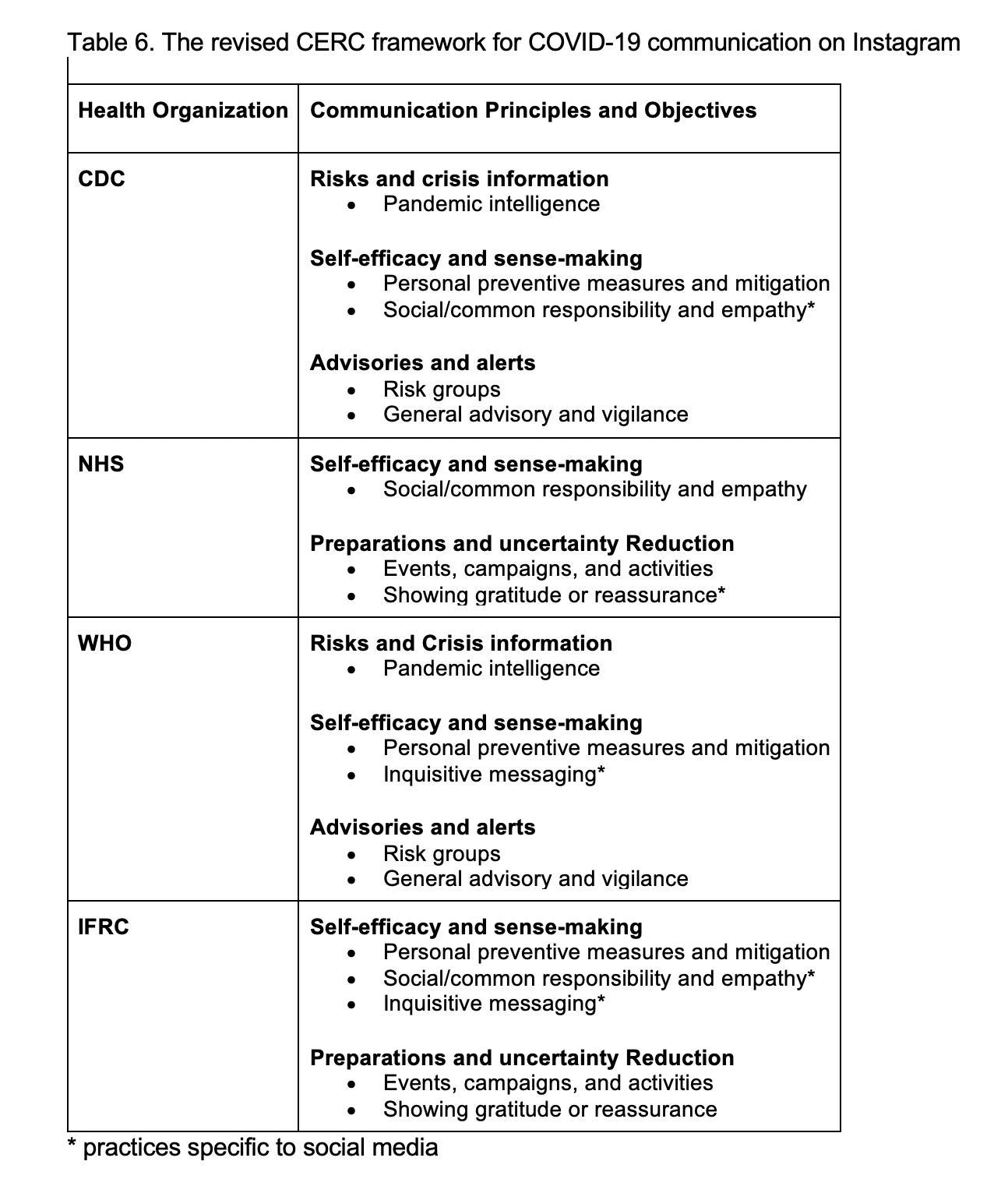
I am pleased to share that my collaborative research has been published in the International Journal of Disaster Risk Reduction. With my colleagues from Aalto University in Finland (Dr. Aqdas Malik, lead author) and Western University in Canada (Dr. Anabel Quan-Haase), we explored how public health agencies engaged with their audiences through Instagram especially during the COVID-19 Pandemic. The abstract of the research study is as follows:
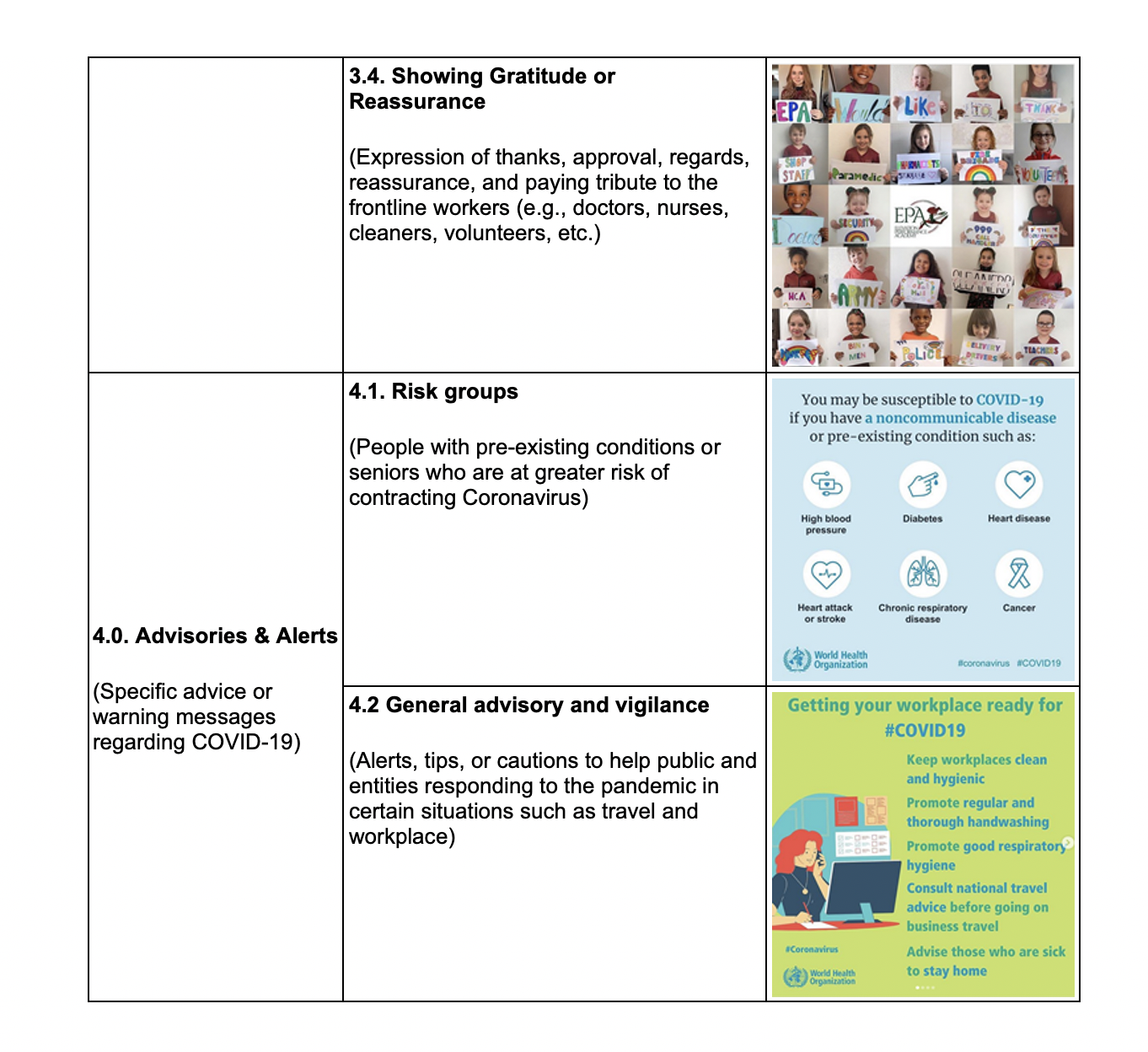
Abstract: Governmental and non-governmental institutions increasingly use social media as a strategic tool for public outreach. Global spread, promptness, and dialogic potentials make these platforms ideal for public health monitoring and emergency communication in crises such as COVID-19. Drawing on the Crisis and Emergency Risk Communication framework, we sought to examine how leading health organizations use Instagram for communicating and engaging during the COVID-19 pandemic. We manually retrieved Instagram posts together with relevant metadata of four health organizations (WHO, CDC, IFRC, and NHS) shared between January 1, 2020, and April 30, 2020. Two coders manually coded the analytical sample of 269 posts related to COVID-19 on dimensions including content theme, gender depiction, person portrayal, and image type. We further analyzed engagement indices associated with the coded dimensions. The CDC and WHO were the most active of all the assessed organizations with respect to the number of posts, reach, and engagement indices. Most of the posts were about personal preventive measures and mitigation, general advisory and vigilance, and showing gratitude and resilience. An overwhelming level of engagement was observed for posts representing celebrity, clarification, and infographics. Instagram can be an effective tool for health organizations to convey their messages during crisis communication, notably through celebrity involvement, clarification posts, and the use of infographics. There is much opportunity to strengthen the role of health organizations in countering misinformation on social media by providing accurate information, directing users to credible sources, and serving as a fact-check for false information.
A promise of social media is that it provides a level playing field to any entity with varied budgets and mandates. Instagram can be an effective tool in crisis communication, reaching a large, engaged audience through celebrity involvement, clarification posts, and the use of infographics. From a CERC perspective, the current research has identified gaps in social media communication during a pandemic or crisis situation. Our findings also serve as a roadmap for strengthening the strategic social media communications of health organizations during public health emergencies such as COVID-19 pandemic.
Finally, Instagram is an ideal venue for reaching youth in crises and emergencies, as this demographic does not rely on mainstream media as their main source of news information. There is much opportunity to strengthen the role of health organizations in countering misinformation on Instagram and other social media by providing accurate information, directing users to credible sources, and serving as a fact-check for false information.
Our latest research, Public engagement model to analyze digital diplomacy on Twitter: A social media analytics framework has been published in the International Journal of Communication.
Abstract:
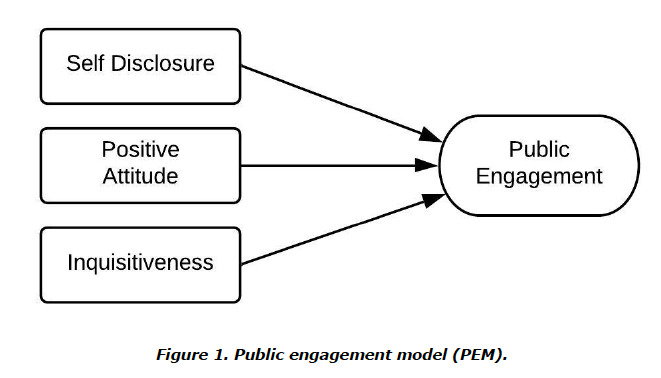
Social media’s pervasiveness has created new demands for openness, transparency, real-time communication, and public engagement in diplomacy. In this study, we analyze public engagement strategies for diplomacy on Twitter that were employed by a German ambassador. By applying a text analytics approach, we explored the ambassador’s tweets’ core themes, how people reacted to those tweets, and what type of topics received higher engagement for 2 years. Eight themes emerged from our analysis of the tweets: democracy, politics and law; society and culture; conflict and violence; personality; environment and health; economic and social development; personal life; and embassy affairs. By analyzing the tweets’ content, we present a public engagement model (PEM) for social media communication by highlighting 3 key factors that promote online public engagement: self-disclosure, positive attitude, and inquisitiveness. Results suggest that over 2 years, the German ambassador was a highly engaging personality in Pakistan, with around 4,369 interactions and highlighted positive diplomatic communication on Twitter. Tweets were positive, courteous, respectful, personalized, interactive, and direct.
Most communication campaigns strive to achieve favorable effects on their publics. Such desirable outcomes may include creating awareness about products, services, and policies, in addition to engendering positive opinions and behaviors (Dozier & Ehling, 1992). Social media provides even greater avenues to connect with the public. Its pervasiveness has created new demands for openness, transparency, real-time communication, and public engagement, especially for diplomatic communication.
A growing number of diplomats use Twitter to communicate daily with global audiences and their counterparts (Duncombe, 2017), thus reducing the gap between individuals and government representatives. The affordances of Twitter make the network unique for various purposes, such as political engagement and discussions (Ahmad, Alvi, & Ittefaq, 2019; Schroeder, 2018; Vergeer, 2017), and enabling two-way communication (Choi, 2015). In an age of abundant misinformation and fake news (Khan & Idris, 2019), diplomats or representatives of a country take a direct role in being active on online social networking sites to further their countries’ official narratives. This Internet-based people-centric engagement is starkly different from the more centralized and closed diplomacy of the past (Cull, 2010).
Politicians, government officials, diplomatic missions, embassies, and ambassadors are increasingly active on social platforms such as Twitter, Facebook, Weibo, and YouTube (Dodd & Collins, 2017; Jiang, 2016; Strauß, Kruikemeier, van der Meulen, & van Noort, 2015). Most notable of such Twitter interactions were the ones surrounding the former U.S. President Donald Trump, which has often been seen as inappropriate for American digital diplomacy. The Chinese state news agency Xinhua reacted to Trump’s negative tweets by stating that “addiction to Twitter diplomacy is unwise” (Huang, 2017, p. 1). We cannot thus underestimate the positive and negative power of such social platforms. Although Twitter is an essential tool for digital diplomacy, research about how ambassadors engage in public diplomacy via social media in the Global South is scarce. Some studies have shown that Western embassies have not effectively used social media for diplomacy and seldom engage in direct interactive communication (Strauß et al., 2015).
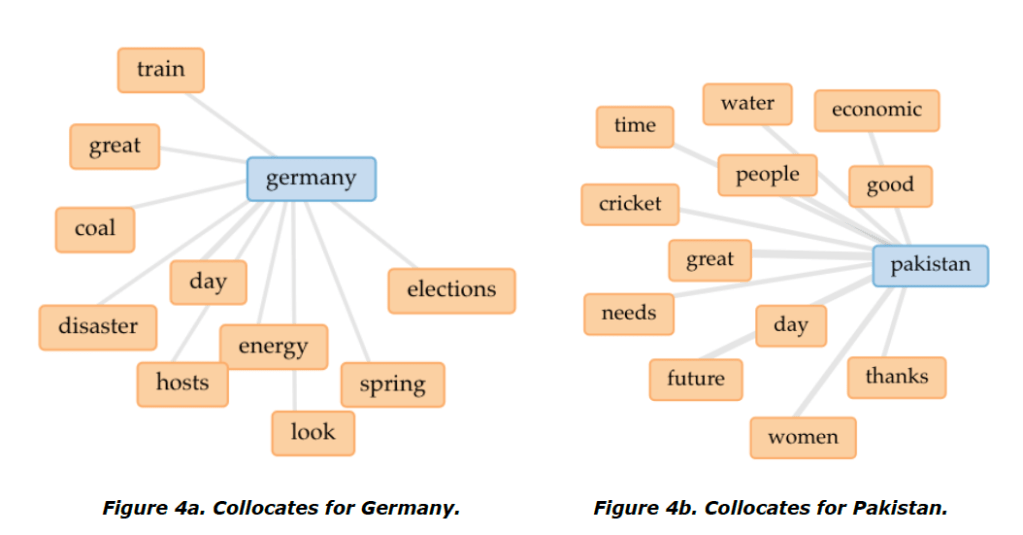
In this study, we reveal how the German Ambassador to Pakistan, Martin Kobler, communicated via Twitter for diplomacy that led to public engagement. Ambassador Kobler served in Pakistan between 2017 and 2019, was very visible in traditional (television and newspapers) and social media, and had more than 200,000 real Twitter followers. A large Pakistani English language daily, Dawn, stated that “German ambassador tweets his way to the hearts of Pakistanis” (“This Isn’t Goodbye,” 2019, p. 1). In an interview with Global Village Space magazine, he said that he had used Twitter before for political messages, but here in Pakistan, he did it differently (Minhas, 2018). Ambassador Kobler had not only attracted considerable media attention, but the effects of his interactions on Twitter have also even been visible offline. For example, he has engaged the Pakistani community in real-life activities such as planting trees, recycling trash, and holding social gatherings. Especially for a country like Pakistan which has received negative media portrayal in the Western press for security issues over the past two decades (Shabbir, 2012), such bold and open engagement (online and offline) of an ambassador from a major European country is unprecedented and has been received with great enthusiasm.
Over the years, social media use has been increasing in Pakistan. Users, particularly the younger ones, are actively engaging online and interacting with personalities and brands (Ida & Saud, 2020). Twitter is among the top 10 most used social and mobile networks in Pakistan, and most of the country’s Internet and social media users are between the ages of 18 and 34 years (Kemp, 2019).
Based on an understanding of digital public diplomacy, we propose the public engagement model (PEM) to analyze the public engagement strategies on Twitter that were employed by the German ambassador. By applying a text analytics approach, we analyzed the core themes of Ambassador Kobler’s tweets, how people reacted to those tweets, and what kind of topics received higher engagement over two years. Through this study, we enrich the public engagement scholarship by highlighting three significant factors in the proposed PEM that promote online public engagement: self-disclosure, positive attitude, and inquisitiveness.
The following themes were identified from the tweets by the German ambassador:
A. Democracy, Politics, and Law
B. Society and Culture
C. Conflict and Violence
D. Personalities
E. Environment and Health
F. Economic and Social Development
G. Personal Life
H. Embassy Affairs
In this study we propose the Public Engagement Model (PEM). The PEM comprises three factors, Self Disclosure, Positive Attitude, and Inquisitiveness as antecedents of public engagement via social media.
We believe that a further factor leading to higher levels of digital engagement is in social media posts that ask a question and summon curiosity. We term this factor as inquisitiveness. Building on these factors, we propose the PEM comprising self-disclosure, positive attitude, and inquisitiveness factors. Major postulates of the PEM for public communication are discussed below.
Self-Disclosure Self-disclosure is defined as “any message about the self that the person communicates to another” (Wheeless & Grotz, 1976, p. 338). In offline contexts, self-disclosure has been shown to offer various benefits in terms of higher satisfaction, trust, and solidarity (Martin & Anderson, 1995). It offers the potential to improve relationships. Especially in the context of social media, self-disclosure stimulates feedback (Imlawi & Gregg, 2014).
Positive Attitude A positive attitude is a desirable trait in public relations (Kang, 2014). The positive orientation of Twitter posts can further attract positive reactions from users. Research has shown that positive interactions with online entities can lead to a more positive attitude and greater or higher user engagement. Thus, it is expected that a positive attitude reflected in social media posts can further promote positive active engagement from users.
Inquisitiveness Inquisitiveness has been defined as “examination or investigation” or curiosity (“Curious,” 2020). Inquisitiveness implies a presence of interest, inquiry, search, and probing behavior reflected in the wording of the tweets or social media posts. While research in this area is scant, anecdotal evidence suggests that questions effectively drive action and help gain attention (Smarty, 2020). On seeking a post phrased as a question, users may be instinctively inclined to find an answer (Lammon, 2020). In diplomatic communication, we noticed evidence of tweets by the German ambassador that asked users a question or elicited an opinion. Such inquisitive posts have the potential to spur a conversation.
Conclusion
Factors such as trust, satisfaction, positive word of mouth, and loyalty are some of the antecedents of engagement (Kang, 2014). Others have outlined the role of relationship-building as an essential component of engagement on social media (Kodish & Pettegrew, 2008). Furthermore, factors that can build online relationships and engender engagement are self-disclosure and humor (Imlawi & Gregg, 2014). Positivity is also an essential factor in promoting social media engagement (Strauß et al., 2015). Dodd and Collins (2017) suggest public relations engaging message strategies for public diplomacy that consists of appealing to emotions, involving particular points of view, and calling to action.
Statecraft in the 21st century is challenging in various ways, but social media open new arenas for governments to directly engage audiences. Ambassador Kobler’s public diplomacy with the Pakistani public through Twitter presents a classic case of how high levels of engagement can be elicited through foreign audiences using social media messaging that is open, direct, positive, and inquisitive. In a developing country, social media messaging for public diplomacy by an ambassador, among other themes, can be centered on topics such as democracy, politics, and law; personal life; economic development; environment and health; and society and culture. The German ambassador’s main themes on Twitter are centered on building goodwill between countries and can be adapted and used as a part of a digital engagement strategy for diplomatic communication in other countries. Just as these themes are relevant in a developing country such as Pakistan, state representatives in other countries can rely on social media messaging that is engaging and builds positive goodwill between nations.
Despite Germany and Pakistan having diverse culture, society, and foreign policy, Ambassador Kobler became one of the most beloved ambassadors to Pakistan. He achieved high engagement levels on Twitter with 4,369 interactions and posted 778 original tweets, retweets, and pictures, posing questions to the locals, and using hashtags to cover important topics. He also responded to questions and mentions, enabling two-way communication with his audience, portraying a positive image of Pakistan, and encouraging the two countries to build closer ties. The main engaging topic was society and culture, which highlighted Pakistani food, traditional Pakistani clothing, and iconic places such as Lahore, Gilgit Baltistan, and Multan.
Many would view Ambassador Kobler as a charismatic personality. He used themes that touched his Pakistani audience’s hearts and minds on Twitter, appealing to emotions involving particular points of view and calling to action either explicitly or implicitly, creating a successful digital engagement strategy.
Overall, this research offers an empirical analysis of the actual usage and themes of engagement that led an ambassador to have over 200,000 followers on Twitter, demonstrating that Twitter is an imperative tool of digital diplomacy. The study has various strengths: It identifies the drivers of public engagement, provides a guideline for diplomatic communication that engages the public, and the research can be useful and applied beyond public diplomacy in other domains. Nevertheless, the study has its limitations. Our focus was on active engagement only.
Future research can employ novel techniques to study passive engagement, which usually forms the bulk of social media engagement (Khan, 2017). Moreover, a comparison of diplomatic communication via social media of other ambassadors can also help expand knowledge in this interesting domain. Considering the significance of the PEM, future research can also parse out the contributing factors using different research methods for various social platforms such as Facebook, YouTube, and Instagram. For example, research scholars can also delve into social network analysis technique to explain the structure of the network and investigate the linkages among different actors.
The research can be cited as follows:
Khan, M. Laeeq, Ittefaq, M., Pantoja, Y., Raziq, M., and Malik, A. (2021). Public Engagement Model to analyze digital diplomacy on Twitter: A social media analytics framework, International Journal of Communication, 15, 1741-1769, https://ijoc.org/index.php/ijoc/article/view/15698
I am pleased to announce the publishing of our latest journal article titled, “The kiss of death – Unearthing conversations surrounding Chagas disease on YouTube”. This study discussed the motivations that attract social media users to YouTube as well as their health belief towards Chagas disease, and how health communication experts can take advantage of various message appeals while conducting health campaigns.
While the world is gripped by the Coronavirus (COVID-19) pandemic, other emerging infectious diseases also remain public health threats having the potential to disrupt daily lives. In recent years, Chagas disease, traditionally endemic in Latin America, especially in rural areas where there is high poverty, has made its way to the United States. It is estimated that at least 300,000 people live with Chagas disease in the United States.
This study employed Uses and Gratification Theory (UGT), Health Belief Model (HBM) and a mix of social media analytics techniques to highlight the important role of social media in health communication. YouTube comments surrounding Chagas disease were analyzed. A web-based software called Netlytic was used to capture and conduct text analytics. The sentiment of user comments on each of the five videos selected for this analysis was measured using SentiStrength.
The study found out that YouTube comments associated with Chagas disease news information that elicited active engagement amongst YouTube users were appreciative, had an element of sympathy, emotional appeal, or were entertaining. 11% of YouTube users had personal experiences with the deadly kissing bugs. Lack of public understanding about Chagas disease necessitated 20% of YouTube users to seek additional information on how to diagnose, prevent, and cure Chagas disease after watching the YouTube videos. In as much as 24% of the YouTube comments were supportive and appreciative of the information about Chagas disease disseminated through the videos, 8% were highly critical of the videos. Unfortunately, 3% of the comments had xenophobic sentiments. However, more than half of the comments were neutral (54.7%). In addition, 82% of YouTube comments had no information about the susceptibility to Chagas disease and thus failed to indicate that Chagas disease is also a threat to residents of the United States.
This study highlighted the great potential for YouTube as a tool for health communication. Significant number of YouTube users in this study had low awareness about the effectiveness of the prevention strategies employed to prevent the spread of the Kissing bug as well as their susceptibility to Chagas disease. This calls for more sustained awareness raising activities since Chagas disease is also a threat to residents of the United States. Sustained health communication campaigns that target policymakers will lead to improvement of the implementation, coverage, access, and quality of health care for Chagas disease patients, including early diagnosis and treatment interventions. Health communication practitioners have been the go-to source for health information, especially of neglected tropical diseases such as Chagas. However, due to the current digital age and concomitant proliferation of social media platforms such as YouTube, social media users affected or living within disease prone environments have turned to social media including YouTube to seek as well as share information about diseases. This change of information landscape necessitates the use of YouTube by health communication professionals as a channel for health communication campaigns.
The study was led by a SMART Lab team member and a PhD student Aggrey Willis.
Otieno, A. W., Roark, J., Khan, M. Laeeq, Pant, S., Grijalva, M. J., & Titsworth, Scott, (2021). The kiss of death – Unearthing conversations surrounding Chagas disease on YouTube, Cogent Social Sciences, 7:1, 1858561, https://doi.org/10.1080/23311886.2020.1858561
Note: A similar version of this post is also available on the SMART Lab website.



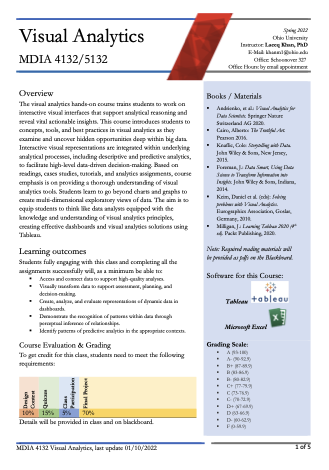 I have designed a new course in visual analytics that I am teaching this spring 2022 at Ohio University. The visual analytics hands-on course trains students to work on interactive visual interfaces that support analytical reasoning and reveal vital actionable insights. This course introduces students to concepts, tools, and best practices in visual analytics as they examine and uncover hidden opportunities deep within big data. Interactive visual representations are integrated within underlying analytical processes, including descriptive and predictive analytics, to facilitate high-level data-driven decision-making. Based on readings, cases studies, tutorials, and analytics assignments, course emphasis is on providing a thorough understanding of visual analytics tools. Students learn to go beyond charts and graphs to create multi-dimensional exploratory views of data. The aim is to equip students to think like data analysts equipped with the knowledge and understanding of visual analytics principles, creating effective dashboards and visual analytics solutions using Tableau.




 Laeeq Khan, Ph.D.